
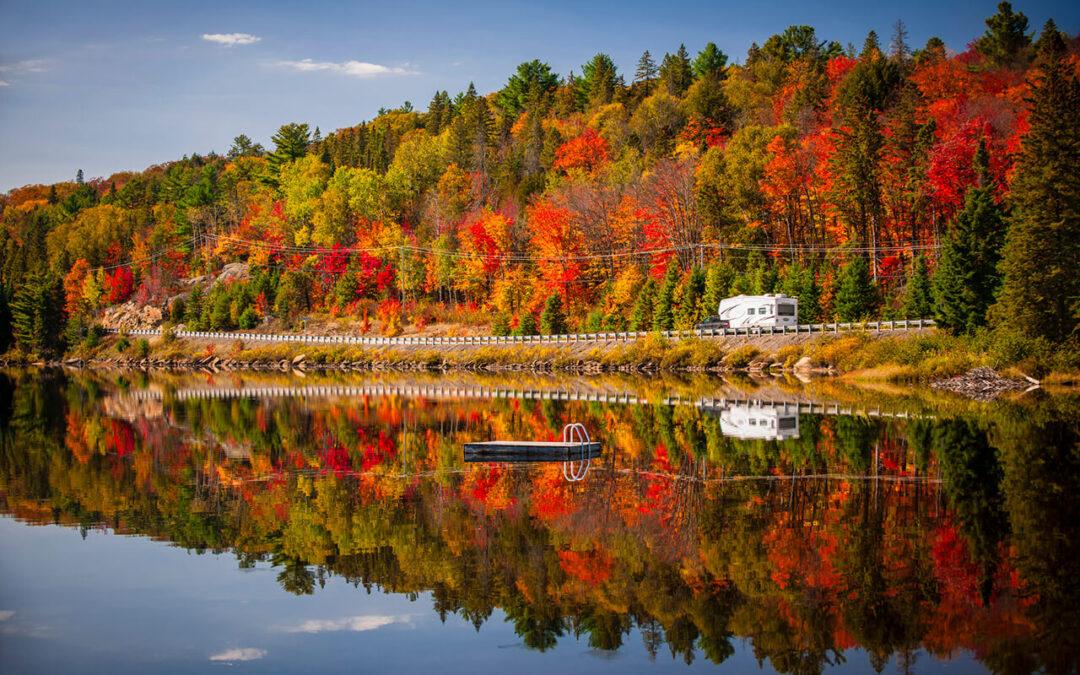
The crowds that fill campgrounds through summer thin out dramatically after Labor Day, temperatures drop to the range that makes campfires feel necessary rather than optional, and the landscape shifts into the color display that makes certain routes genuinely transformative. Fall foliage, crisp air, and the quiet of a campground that isn’t at capacity are the reasons RVers who’ve done it once tend to make RVing in autumn a standing annual tradition.
The Routes and Destinations Worth Planning Around
The geography of fall color in North America follows a predictable pattern, moving southward and to lower elevations as the season progresses, which means you can chase the peak display across an extended trip. New England is the iconic destination for fall foliage. Vermont, New Hampshire, and Maine offer peak color typically in late September through mid-October, with the White Mountains and Green Mountains providing the elevation variation that concentrates and intensifies the display. The Kancamagus Highway in New Hampshire is among the most celebrated fall drives in the country. Campground reservations in this region fill months in advance for peak foliage weekends.
The Blue Ridge Parkway through Virginia and North Carolina is the alternative for RVers seeking foliage without New England’s peak crowds. The parkway’s 469 miles at elevations between 649 and 6,053 feet create an extended color corridor peaking from early October through early November depending on elevation. The Upper Midwest, Minnesota’s Boundary Waters, Michigan’s Upper Peninsula, and Wisconsin’s northwoods provide foliage with significantly lower competition for sites and the specific light quality of the Great Lakes region in autumn that photographers specifically travel for.
What Changes When You’re RVing in Autumn
Temperature swings in autumn are wider than any other season, a day reaching 65°F can follow an overnight dropping to 28°F, particularly at elevation and in northern latitudes. The heating system that’s been silent all summer becomes the most important system in the rig. Verifying it functions before the first cold night is the preparation step that shouldn’t be skipped Propane consumption increases significantly; a full tank at departure and knowledge of refill locations along the route are basic autumn trip logistics.
Water system management becomes a planning consideration for late-autumn RVing in regions where overnight temperatures drop below freezing. Fresh water lines, the pump, and water heater are vulnerable in sustained cold. Many RVers transitioning into late autumn camping use heated hose connections and tank heaters, or shift to dry camping with pre-filled fresh tanks to avoid the issue entirely.
The Campground Experience of RVing in Autumn
The campground environment of autumn is one of the season’s most reliable benefits; reduced occupancy after Labor Day changes the experience of sites and shared spaces. Sites booked months in advance from May through August become available with far less lead time. Neighbors who were shoulder-to-shoulder through summer are sparse enough that solitude is achievable even in established campgrounds. Ranger programs and campground facilities overwhelmed in peak season become accessible. The campfires limited or prohibited through dry summer months are encouraged in autumn.
Frequently Asked Questions (FAQs)
When is peak foliage for RVing in autumn and how do I time my trip?
Peak timing varies significantly by latitude and elevation. At high elevations in New England, peak color typically occurs in late September; at lower elevations further south, it extends through October and into November. The Foliage Network and state tourism foliage trackers provide real-time updates RVers can use to refine routing in the weeks before a trip.
What temperature range should I expect when RVing in autumn?
Daytime highs in popular fall foliage regions typically range from the upper 40s to mid-60s in October, with overnight lows frequently dropping into the 30s and below at elevation. Dressing in layers, using a sleeping bag rated for expected lows, and ensuring the furnace is functioning and the propane supply is adequate covers most of the temperature range autumn produces.
Do I need to winterize my RV for autumn camping?
For early-to-mid autumn camping in most regions, full winterization isn’t necessary, but cold-weather precautions are. A heated water hose, tank heaters for fresh and grey tanks, and insulating the underbelly address the vulnerability sustained sub-freezing nights create. For late autumn camping in northern regions where overnight temperatures are consistently below 28°F, partial winterization between trips may be more practical than managing freezing risk continuously.
Are campgrounds open during autumn and are reservations required?
Most public campgrounds in popular foliage destinations remain open through October and in some cases into November, though facilities may be reduced and water shut off late in the season. Reservations are strongly recommended for peak foliage weekends in New England and along the Blue Ridge Parkway. Outside peak weekends, availability improves dramatically, and short-notice reservations are often possible in regions where summer booking requires months of lead time.
What are the best day activities in autumn?
Hiking is the activity most transformed by autumn; trails that are hot, buggy, and crowded in summer become comfortable and quiet in fall, with canopy color overhead. Scenic drives that are impractical in summer traffic flow freely after Labor Day. Apple orchards, harvest festivals, and farmers markets add a cultural dimension summer camping doesn’t offer.
RV Home Inspections provides RV inspections in Houston, Texas. Contact us to schedule an appointment.